The Blog of Henry David Thoreau: Thoreau's Journal: 11-Aug-1853

The Blog of Henry David Thoreau: Thoreau's Journal: 11-Aug-1853: "Thoreau's Journal: 11-Aug-1853
What shall we name this season? This very late afternoon, or very early evening, this severe and placid season of the day, most favorable for reflection, after the insufferable heats and the bustle of the day are over and before the dampness and twilight of the evening! The serene hour, the Muses' hour, the season of reflection! It is commonly desecrated by being made teatime. It begins perhaps with the very earliest condensation of moisture in the air, when the shadows of hills are first observed, and the breezes begin to go down, and birds begin again to sing. The pensive season. It is earlier than the '“chaste eve'” of the poet. Bats have not come forth. It is not twilight. There is no dew yet on the grass, and still less any early star in the heavens. It is the turning-point between afternoon and evening. The few sounds now heard, far or near, are delicious. It is not more dusky and obscure, but clearer than before. The clearing of the air by condensation of mists more than balances the increase of shadows. Chaste eve is merely preparing with 'dewy finger'” to draw o'’er all '“the gradual dusky veil.'” Not yet '“the ploughman homeward plods his weary way,' nor owls nor beetles are abroad. It is a sea"

I know I've mentioned this blog before, but todays post just seemed to speak to me so I am putting it here.

On another note I am experimenting with a new news reader. I have never been satisfied with any news reader I have tried. I just recently gave up on the one built into IE7 (that was all I was running the beta for) and went back to Google Reader. But, I must admit I kinda' like this new reader...Newshutch. If you are like me and tend to subscribe to folks blog feeds, this new reader seems to have a better interface...try it out, tell 'em I sent ya...

Photo of the Day
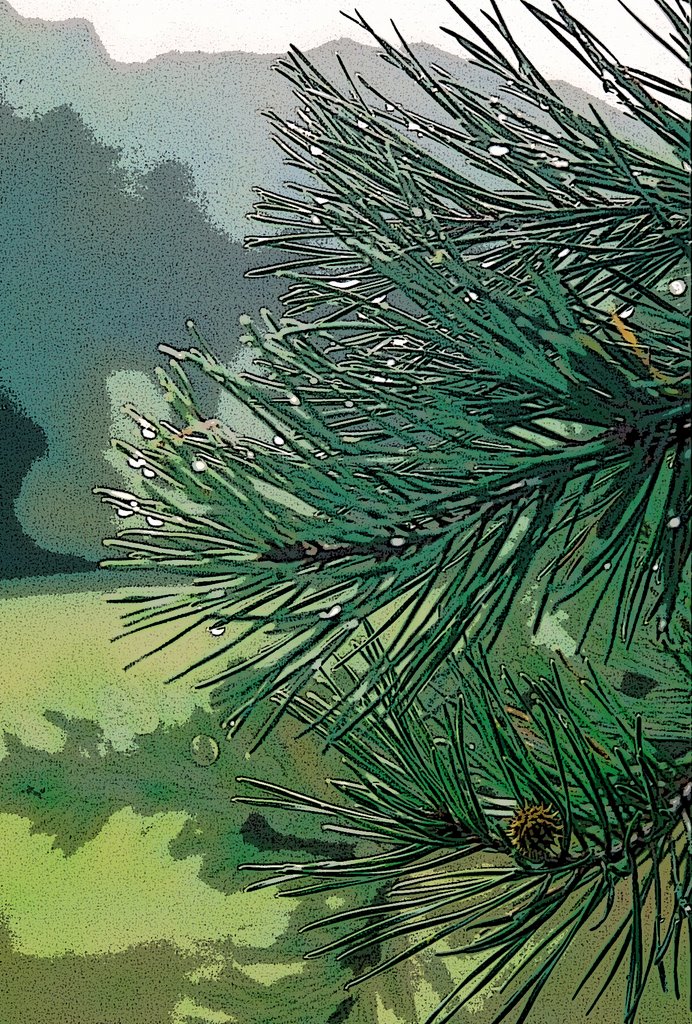

Dew on Pine needles, Boyd Gap, Tn.
July 2006

How does rice thrive in toxic soil? - Weird Plants

How does rice thrive in toxic soil? - Weird Plants:

The cultivation of rice has always appeared to be environmentally-friendly. After all, most rice is produced in paddies. Water buffalo churn up the soil, most of the fertilizers used are organic, and the planting and harvesting is done by hand. But organic matter and flooded conditions provide a perfect home for anaerobic (living without air) bacteria that produce methane.
Methane is lethal to most plants. Rice plants remove 90 percent of this toxin from the soil by acting as gas vents, releasing the methane to the atmosphere. Before rice was cultivated, this trait was a simple solution ensuring the plants' survival. But now that rice is intensively cultivated, the fields are suspected of releasing as much as 115 million tons of methane into the atmosphere every year. Methane is a greenhouse gas and, molecule for molecule, it traps 20 times the heat that carbon dioxide does. When conditions are right, some of the methane is converted into methyl halides known to damage the ozone layer in the atmosphere.

I find the above information both intriguing and a bit scary. Here we are worrying about the carbon dioxide in the atmosphere, and most of the developing world is probably dumping a greater ratio of methane into the atmosphere. Check out the link, I have been subscribed to killerplants newsletters for years now and always find something of interest the daily emails from Chelsie Vandaveer...

Being as there are large areas of my area in rice cultivation, I find the methane information of rising concern. Maybe we should build covers over the fields and capture the methane for power production?

Photo of the Day


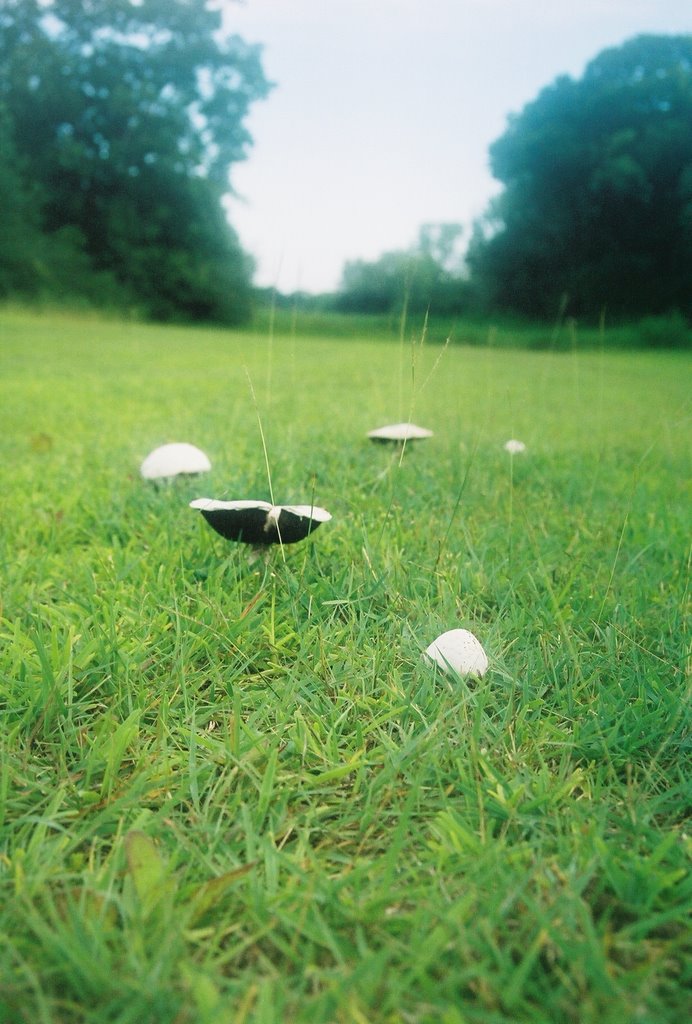
Toadstools in Grass
Taken in my backyard earlier this summer.

My Blog List